Kling 3 4K
8.2/10Editorial score
Higher-rated areas: Visual quality, Creative control
Compare engines
See what each model can create. Compare quality, controls and price.
This page compares Kling 3 4K vs LTX 2.3 Fast on MaxVideoAI across native 4K delivery, iteration cost, key specs, and a scorecard across 10 criteria. Use it to decide when 4K is worth the premium before opening each engine profile for full specs.
Higher-rated areas: Visual quality, Creative control
Higher-rated areas: Speed & reliability, Audio & lip sync
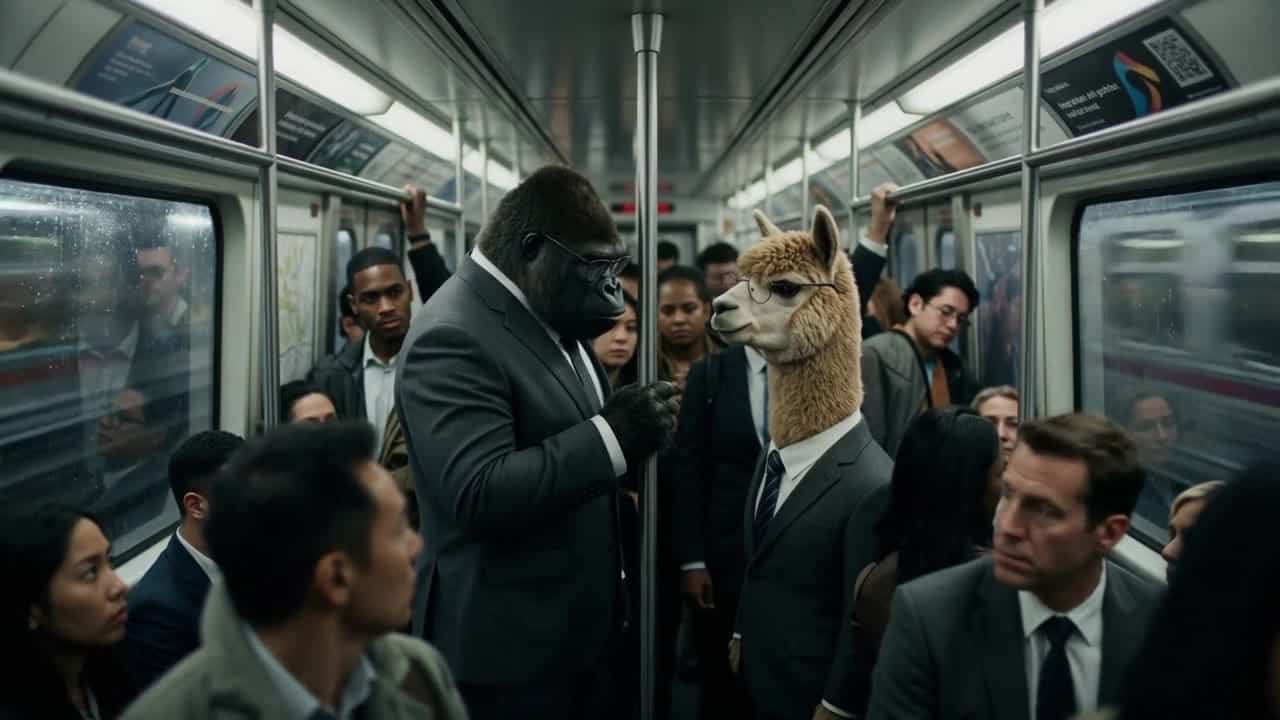
Independent examples, with different prompts and settings.
These are MaxVideoAI editorial assessments, not same-prompt test results. The dates below record score updates. MaxVideoAI sells access to the models it covers.
Score records last updated: Kling 3 4K · LTX 2.3 Fast
How we benchmark| Criterion · 0–10 | Kling 3 4K | LTX 2.3 Fast |
|---|---|---|
| Follows your promptHow closely the result follows the prompt. | Kling 3 4K8.4/10 | LTX 2.3 Fast7.1/10 |
| Visual qualityDetail, lighting and visible artifacts. | Kling 3 4K8.9/10 | LTX 2.3 Fast6.9/10 |
| Natural movementHow naturally subjects and cameras move. | Kling 3 4K8.2/10 | LTX 2.3 Fast7.2/10 |
| Human appearanceFaces, hands and body movement. | Kling 3 4K8.1/10 | LTX 2.3 Fast7.0/10 |
| Audio & lip syncSpeech, sound and mouth movement in sync. | Kling 3 4K8.4/10 | LTX 2.3 Fast7.3/10 |
| Creative controlHow much direction the model follows. | Kling 3 4K8.5/10 | LTX 2.3 Fast7.1/10 |
| Criterion · 0–10 | Kling 3 4K | LTX 2.3 Fast |
|---|---|---|
| Consistency over timeWhether details hold together over time. | Kling 3 4K8.0/10 | LTX 2.3 Fast5.9/10 |
| Readable textHow readable generated text and interfaces are. | Kling 3 4K6.9/10 | LTX 2.3 Fast6.2/10 |
| Multi-shot continuityContinuity between different shots. | Kling 3 4K8.0/10 | LTX 2.3 Fast6.0/10 |
| Speed & reliabilityGeneration speed and reliability. | Kling 3 4K5.8/10 | LTX 2.3 Fast9.0/10 |
Generate with
Generate with
Compare prices by resolution. The final quote depends on your duration, mode and settings.
Your settings. Your quote. Before you generate.
USD estimate · snapshot generated
Check duration, resolution, supported inputs and controls. Open each model’s guide for its full feature set.
| Key spec | Kling 3 4K | LTX 2.3 Fast |
|---|---|---|
| Pricing (MaxVideoAI) | 4K: $0.546667/s | 1080p: $0.053333/s1440p: $0.105/s4K: $0.208333/s |
| Text-to-Video | Supported | Supported |
| Image-to-Video | Supported | Supported |
| Video-to-Video | Not supported (no video input on this MaxVideoAI route) | Not supported |
| First/Last frame | Supported | Supported (start + end image in I2V) |
| Reference image / style reference | Image-to-video: 1 source image; optional end frame | Supported (single start image; no separate style-reference stack) |
| Reference video | Not supported (no video input on this MaxVideoAI route) | Not supported |
| Max resolution | 4K | 4K (6–10s); 1080p for >10s routing |
| New clip · maximum | 15 sText to video, Image to video: 3–15 s | 20 sText to video, Image to video: 6 / 8 / 10 / 12 / 14 / 16 / 18 / 20 s |
| Aspect ratios | 16:9 / 9:16 / 1:1 | 16:9 / 9:16 |
| FPS options | 24 | 24 fps / 25 fps / 48 fps / 50 fps |
| Output format | MP4 | MP4 |
| Audio output | Supported | Supported |
| Native audio generation | Supported | Supported |
| Lip sync | Supported | Supported |
| Camera / motion controls | Basic | Prompt-based only |
| Watermark | No (MaxVideoAI) | No (MaxVideoAI) |
Duration choices depend on mode and resolution; check the creation settings.
Capabilities available in MaxVideoAI. Provider sources below; their verification dates are not recorded here.
Kling 3 4K: fal.ai (1) · fal.ai (2) · fal.ai (3) · fal.ai (4)
LTX 2.3 Fast: fal.ai (1) · fal.ai (2) · fal.ai (3)
Quick answers about Kling 3 4K vs LTX 2.3 Fast on MaxVideoAI (pricing, modes, specs, and why results differ).
Open a question to read the answer. One answer at a time.
It depends on your workflow. Use the scorecard and specs to decide whether the job needs native 4K delivery or a lower-cost iteration route, then open each engine profile for full details.
Even with similar instructions, models interpret constraints and settings differently. For Kling 3 4K, compare the specs and cost ladder first, then render only approved final shots in native 4K.
Open the full engine profiles for complete specs, controls, and more prompts: /models/kling-3-4k and /models/ltx-2-3-fast. You can also browse more outputs in the engine galleries.
Kling 3 4K and LTX 2.3 Fast are AI video generation engines documented on MaxVideoAI. This page compares native 4K delivery, iteration cost, key specs, and performance data shown above.